


Last Updated: November 22, 2026
Quick Summary
To convert a garage into a gym, measure your floor space and ceiling height, then map the layout with tape before buying equipment. Build your garage gym in order: clear and clean, repair the floor, seal moisture, install flooring, anchor the rack, then upgrade lighting and add a screen.
- The average garage gives you roughly 400 square feet of floor space for your gym.
- A standard power rack needs about 8 feet of clearance for pull-ups.
- Horse stall mats from a farm supply store are a cheaper budget flooring option.
- Bolt your rack down, because an unanchored rack tips during heavy pull-ups or reracking.
- A Lifestyle Garage Door Screen is priced at $1,589.75 and motorized screens at $1,894.40.
Table of Contents
- Start With a Garage Gym Conversion Plan
- What a Garage Gym Conversion Cost Looks Like Line by Line
- Garage Gym Ideas on a Budget That Still Hold Up
- Half Garage Gym Ideas for Homes That Still Park a Car
- How to Convert Your Garage into a Gym DIY, Step by Step
- Ventilation, Screens and Year-Round Comfort
- Safety, Permits and Noise Before You Load the Rack
- Choose Your Garage Screen and Start the Build
- Frequently Asked Questions
Start With a Garage Gym Conversion Plan
Converting a garage into a gym starts with a plan, not a shopping cart. The average garage gives you roughly 400 square feet of floor space, plenty for a power rack, a lifting platform, and cardio equipment if you lay it out before you buy. The right screen and floor choices can help turn that raw concrete box into a workout space that stays drier, cooler, and more bug-free.
Most people buy a rack first and figure out the layout later. That order is backwards. Measure, sketch, then buy.
Measure Floor Space and Ceiling Height First
Grab a tape measure and record four numbers: length, width, ceiling height, and the clearance under your open garage door.
- Length and width: Note where the door tracks hang down. They eat usable space along the sides.
- Ceiling height: A standard power rack needs about 8 feet of clearance for pull-ups. Most garages have 8 to 10 feet.
- Door clearance: Measure from the floor to the lowest point of the open door.
Keep these numbers with you while you shop. Every equipment decision flows from them.
What a Garage Gym Conversion Cost Looks Like Line by Line
A garage gym conversion can range from a modest starter setup to a full build with flooring, equipment, lighting, and ventilation. The spread comes from equipment choice, not the room itself.
Here is how the money breaks down:
| Item | Starter | Mid-Range | Full Build |
|---|---|---|---|
| Flooring | $150 (foam tiles) | $600 (rubber rolls) | $1,200 (interlocking rubber) |
| Rack or storage | $300 (wall rack) | $900 (squat stand) | $2,000 (power rack) |
| Weights and bar | $400 (adjustable set) | $900 (barbell + plates) | $1,800 (bumper plates) |
| Bench and accessories | $150 | $400 | $800 |
| Lighting and electrical | $100 | $300 | $700 |
| Ventilation or screen | $0 | $1,589.75 | $1,894.40 |
| Total | ~$1,100 | ~$4,700 | ~$8,300 |
Budget Scenarios: Starter, Mid-Range and Full Build
Starter: A single-car garage gym for one person doing bodyweight work, dumbbells, and a bench. Foam tiles over the concrete, a wall-mounted rack, and a fan in the corner. This works fine for general fitness and costs the least.
Mid-Range: A two-car garage setup with a squat stand, a barbell, and rubber flooring. Add a retractable or motorized screen across the garage opening so you can train with the door up without inviting insects in.
Full Build: Dedicated strength training space with a power rack, lifting platform, cardio equipment, upgraded lighting, and a motorized screen. This is the build for someone training seriously several days a week.
Garage gym conversion costs by budget tier
Garage Gym Ideas on a Budget That Still Hold Up
Cheap gym ideas fail for one reason: they skip floor protection. A bare concrete floor cracks under dropped weights and gets slick with dust. Spend your first dollars there.
Here is what actually lasts on a tight budget:
- Horse stall mats from a farm supply store, cut to fit. Thick, tough, and cheaper than branded gym flooring.
- A wall-mounted folding rack that swings flat when not in use.
- Adjustable dumbbells instead of a full plate set.
- A used barbell in good condition. Inspect the knurling and spin before buying.
- LED shop lights for bright, even lighting at low cost.
Browse ideas and inspirations for real setups that show how far a small budget can stretch.
Half Garage Gym Ideas for Homes That Still Park a Car
You can keep half the garage for the car and still train well. The trick is a hard dividing line, not a vague "gym corner."
Split the bay down the middle with tape on the floor. Put the rack and platform on one side. Park on the other. Choose equipment that lives against the wall: a folding rack, wall-mounted bike, and vertical plate storage.
A single-car garage can hold a functional gym this way, depending on its dimensions and equipment.
The dividing line works best when the gym side stays dry and pest-free. A screen across the opening can help keep bugs and debris off your mats.
How to Convert Your Garage into a Gym DIY, Step by Step
A DIY garage gym conversion follows a fixed order because each step depends on the one before it. Doing the steps out of sequence costs money and rework, flooring laid before the floor is patched has to come up, and a rack anchored before the layout is final ends up in the wrong spot.
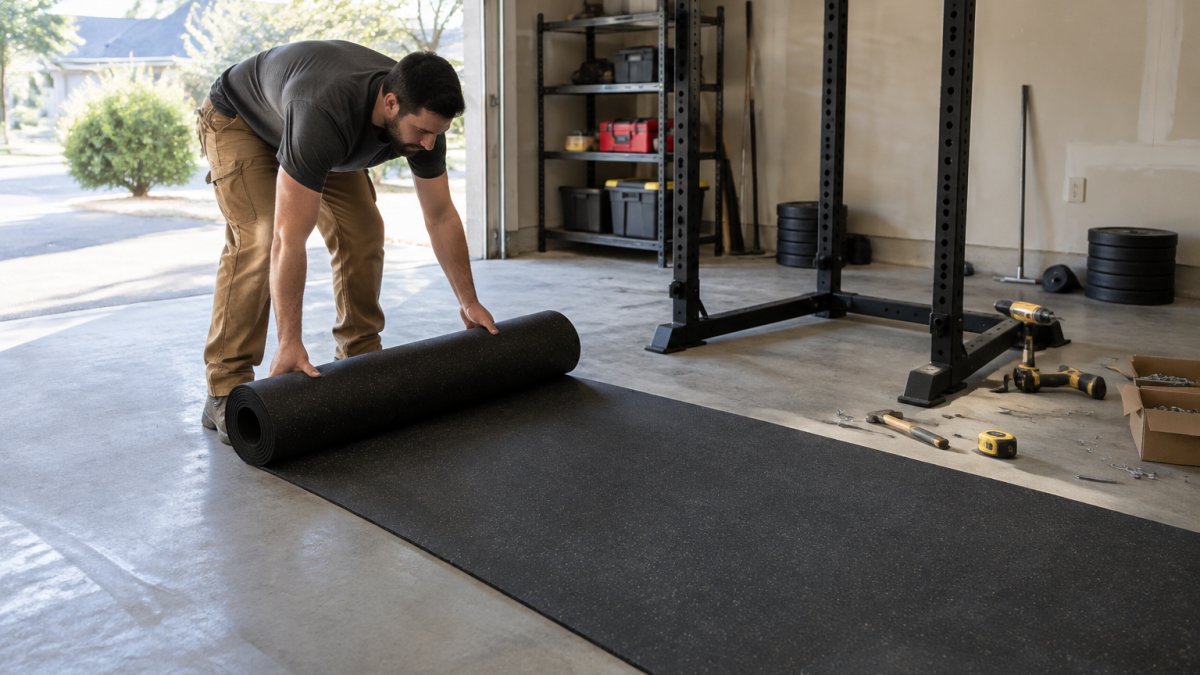
Here is the sequence, with the reason each step sits where it does.
- Clear and clean the space. Remove everything, sweep, and degrease oil stains. Oil and dust prevent mats and anchors from sitting flat, so this is not optional prep.
- Inspect and repair the floor and walls. Patch cracks, note damp spots, and check for efflorescence (the white powder that signals moisture moving through concrete). Repairs must cure before flooring goes down.
- Map the layout with tape. Mark equipment footprints, the swing arc of the garage door, and walking clearance. This is the step that prevents rework later.
- Address moisture and sealing. Seal the floor if it wicks moisture, and keep a gap between mats and walls so damp cannot trap. Skipping this is the most common cause of mold under gym flooring.
- Install flooring. Roll out mats and let them settle for a day before placing equipment. Rubber needs time to flatten.
- Assemble and anchor equipment. Bolt racks to the floor or wall per the manufacturer's instructions. Anchoring comes after flooring so the hardware sits on a stable surface.
- Upgrade lighting and outlets. Add shop lights and confirm circuit capacity before plugging in a treadmill or heater. Electrical work is the step most likely to require a permit.
- Add ventilation or a screen. Install a screen across the garage opening for airflow without bugs. This goes last because it is the least disruptive to reverse if the fit is wrong.
- Test and adjust. Run a full workout and move anything that crowds you. Live with the layout for a week before buying more equipment.
Follow the DIY and installation directions if you plan to install a screen yourself.
Permits, Inspections and Timeline
Many garage gym conversions do not require a building permit because the structure is not changed. Work such as adding electrical circuits, installing insulation or a permanent wall, or altering heating or ventilation may require one, so check with your local building department.
A DIY conversion timeline depends on the size of the space and the work involved, and electrical work can affect scheduling. Electrical work is the schedule wildcard because it depends on panel capacity and inspection scheduling.
Flooring, Anchoring and Ceiling Clearance Checks
Three checks prevent the most common mistakes.
Flooring: Rubber mats protect concrete and help absorb impact. Put a plywood platform under the rack if you plan to drop weights.
Anchoring: Bolt your rack down. An unanchored rack tips during heavy pull-ups or reracking. Use the hardware the rack ships with, and hit studs or concrete anchors.
Ceiling clearance: Stand under the pull-up bar with your arms overhead. You need a few inches above your fingertips. If the bar is too high, lower the rack or switch to a shorter model.
Watch out: skipping the anchor step is how racks tip over. Bolt it down before your first heavy session.
Ventilation, Screens and Year-Round Comfort
A garage gym gets hot, stuffy, and buggy fast. Screens solve all three problems at once.
A screen across the garage opening lets air move while keeping insects, leaves, and dust out. That matters when you train with the door up in summer.
Two options fit most garages:
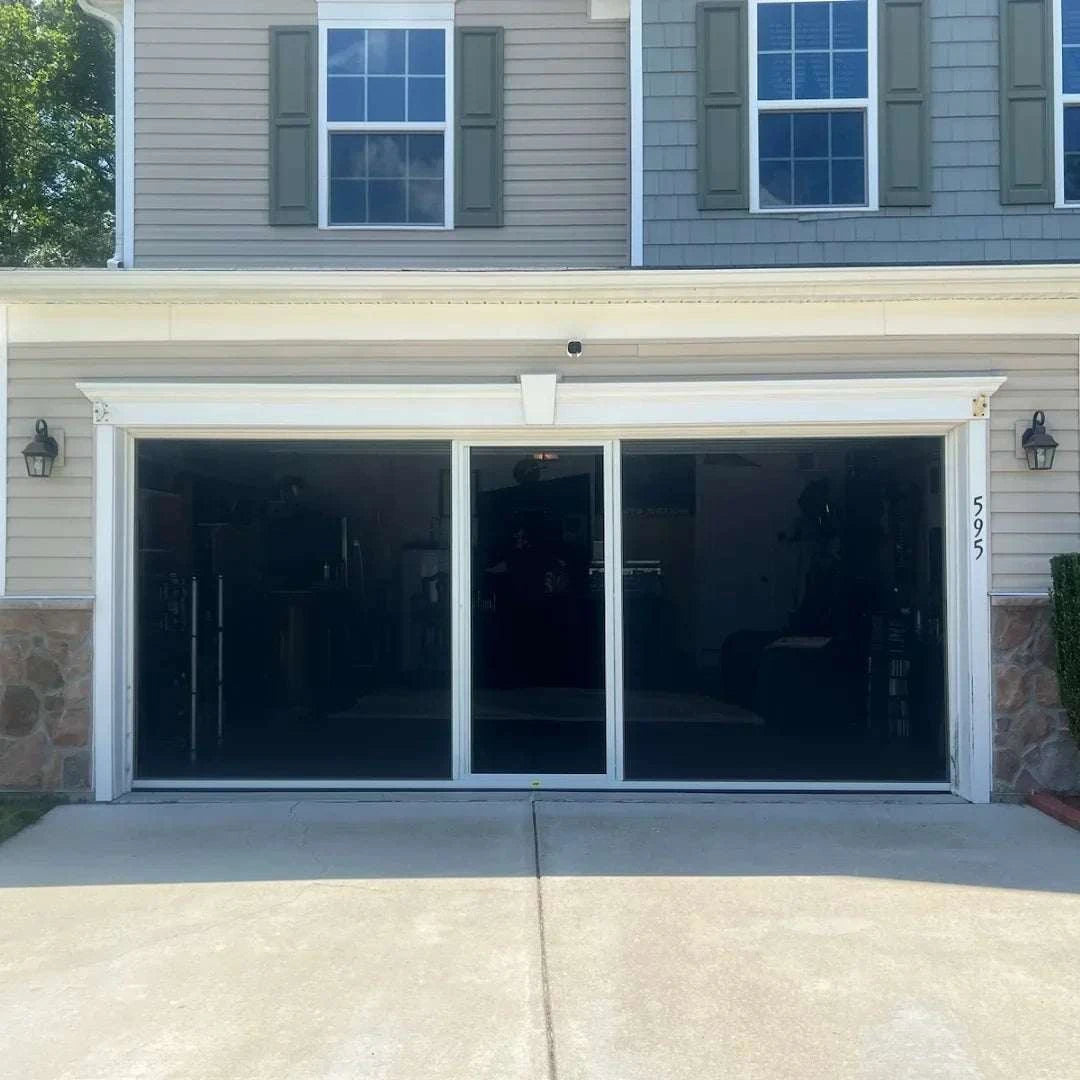
- Lifestyle Garage Door Screen: A PVC-coated polyester screen designed for garage door openings. Lifestyle Garage Door Screen is made from PVC-coated polyester and Aluminum Frame. It includes a center pass-through door and works as a home gym, office, or hobby space. Priced at $1,589.75.
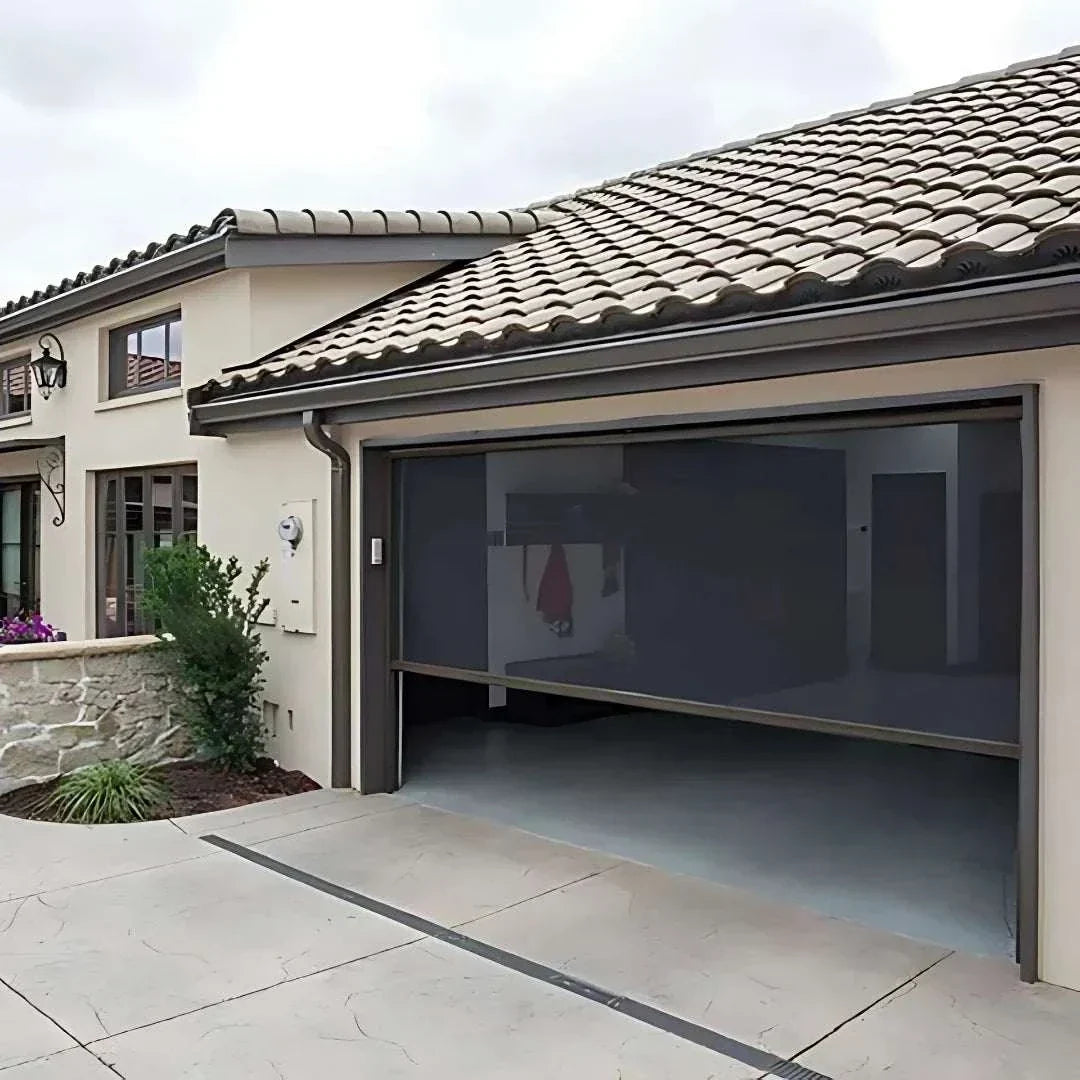
- Motorized Garage Door Screens: Remote-controlled, retractable screens. They help keep bugs out, add privacy, reduce UV heat, and help hold warmth in cooler months. Customizable up to 25 feet wide, with a 15-year mesh warranty. Priced at $1,894.40.
A motorized version may suit a garage gym if you open and close the screen daily, since the remote operates it without walking to the track.
Safety, Permits and Noise Before You Load the Rack
Safety comes before the first heavy lift. Check four things: electrical capacity, moisture, noise and vibration, and the approval and insurance questions most guides skip.
Electrical capacity. Garages often share a circuit with the door opener and exterior lights.
Moisture. Concrete wicks moisture, and damp mats grow mold. Seal the floor and keep a gap between mats and walls.
Noise and vibration. Dropped weights send thuds through the house. A plywood platform with rubber on top cuts vibration.
Permits and insurance. Many garage gym conversions do not require a permit because the structure is not changed.
Access and egress. Keep a clear path to the garage door and do not block the door opener's safety sensor.
Choose Your Garage Screen and Start the Build
The right screen turns a dusty garage into a space you actually want to train in. Ours are built for it, with patented screen technology, expert DIY support, helpful installation videos, and fast shipping.
Measure your opening, pick manual or motorized, and get in touch with questions before you order. We will help you confirm the fit.
Start with the floor, anchor the rack, and screen the opening. Then train.
A garage gym only works if the space stays usable year-round. Heat, bugs, and dust are what push most home gyms into disuse.
Frequently Asked Questions
How much does it cost to convert a garage into a gym?
Most of the spend goes to flooring, equipment and comfort upgrades rather than structural work. Rubber mats, a power rack, a bench and free weights are the core costs, and a garage door screen such as the Lifestyle Garage Door Screen at $1,589.75 adds ventilation and bug protection without a permanent wall. Set your equipment budget first, then price flooring and screens, so you know what is left for lighting and storage.
Do I need a permit to turn my garage into a gym?
A straight equipment swap often does not require a permit, depending on local rules. You likely need one if you add wiring, new circuits, insulation, a permanent wall or a structural change. Check with your local building department before work starts, and tell your insurer the garage is now used for training, since some policies treat gym equipment and floor damage differently once a space is no longer storage.
How do I keep bugs and dust out of a garage gym while still getting airflow?
A retractable or motorized garage door screen is the practical answer. It covers the opening so insects and debris stay out while air moves through, and it rolls away when you need the door. Motorized Garage Door Screens at $1,894.40 run on a remote and fit openings up to 25 ft wide, with a 15-year mesh warranty, which suits a gym you open and close daily.
Can I fit a gym and a car in a two-car garage?
Yes, if you plan the half garage gym around one bay. Keep the parked car's bay clear to the door track, put the rack and mats in the other bay, and store loose weights on a wall rack so nothing sits in the drive path. Measure the door swing and ceiling height before buying a rack, and choose folding or wall-mounted pieces where floor space is tight.

1 comment
Benne Benzel
Love it!